
Know Your Big Truck Blind Spots and How to Stay Safe
April 9, 2026
What is a Blind Spot?
Blind spots on big trucks are areas of the truck in which the driver cannot see when he or she is in the normal driving position. All vehicles have blind spots, but semi-trucks have the largest blind spots for road-approved vehicles. It’s essential that other drivers on the road avoid these large blind spots whenever possible. This is why big truck blind spots are also called “no zones.”
In The Article
Why Are Blind Spots Dangerous?
Blind spots, or “no zones” are extremely dangerous because a truck driver may think his truck and trailer is clear to change lanes or turn, when a car could be in one of these places. Because large trucks are also very heavy, getting into an accident with one can cause irreparable damage to vehicles and extensive injuries to occupants of those vehicles.
For example, if a car attempts to pass a semi-truck, and that semi-truck changes lanes, it could cause a sides-wipe accident or lead to the semi-truck’s trailer tipping over, causing damage to more vehicles.
What Are the Blind Spots for Big Trucks?
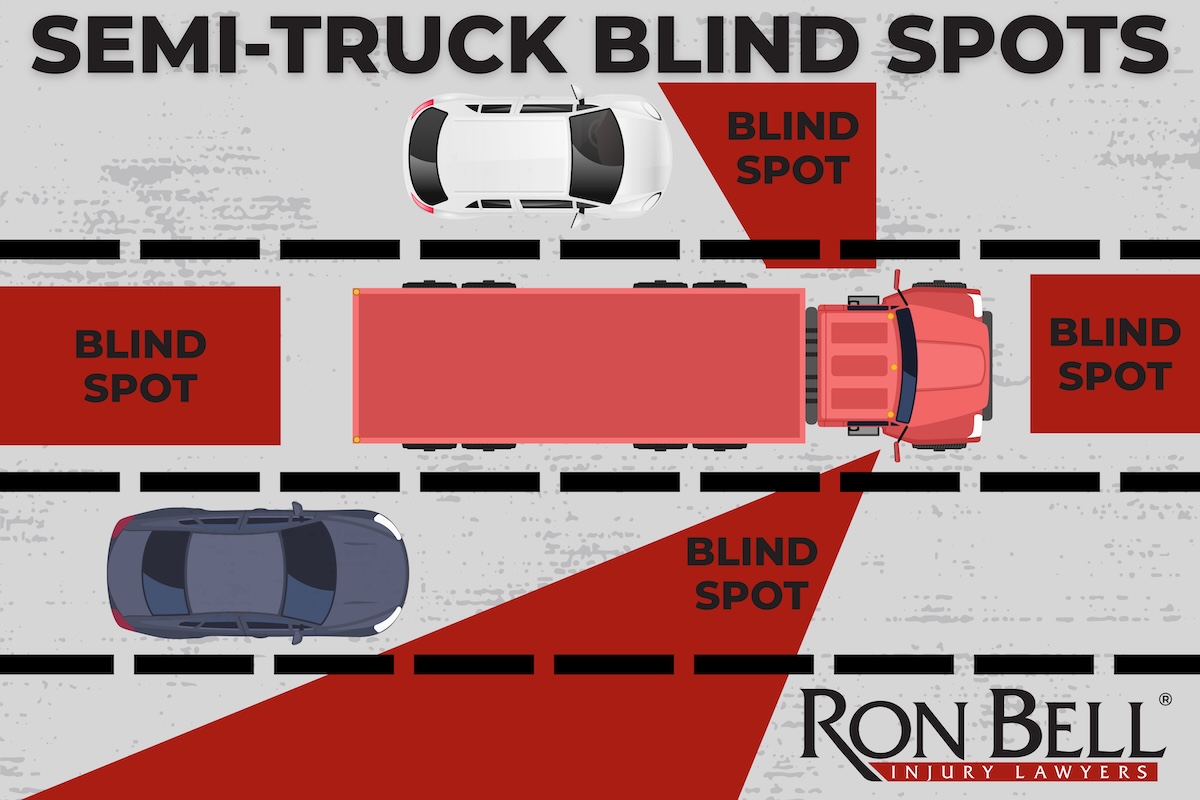
Big truck blind spots occur on all sides of the truck, and the size of the blind spots can vary depending on the size and direction of the blind spot. The four major areas for drivers to avoid when on the road with semi-trucks are the frontend, rearend, driver’s side, and passenger’s side.
What Makes the Frontend Blind Spot Dangerous?
The frontend blind spot is extremely dangerous, because most other drivers believe that if they’re in front of the semitruck, that the truck driver can see them. This is not the case. A truck driver’s cab is usually very high, and the engines are larger than most vehicles. This makes the blind spot in front of the truck extremely dangerous, as the truck driver cannot see the brake lights of vehicles within those blind spots. It’s best practice to avoid the area up to 20 feet in front of the truck, to ensure the driver can see you.
What Makes the Rearend Blind Spot Dangerous?
Rearend blind spots on trucks are very dangerous because semitrucks don’t have rearview mirrors. While most people think that the rearend blind spot doesn’t seem dangerous, if a truck driver cannot see you and he or she brakes hard, you could end up rearending the truck. It’s best practice to stay at least 30 feet behind a truck to stay out of its rearend blind spot.
What Makes the Driver’s Side Blind Spot Dangerous?
The blind spot on the driver’s side of a large truck should be avoided at all costs. It’s one of the most dangerous blind spots, because if you’re stuck in this blind spot, and a truck tries to change lanes, you could be severely injured. This blind spot covers a large portion of the left lane next to a truck. Should you need to pass a large truck, be sure to give yourself enough clearance to get out of the blind spot quickly. When you can see the truck driver’s face in his side mirror, he or she can see you passing. But if you can’t see his or her face.
What Makes the Passenger Side Blind Spot Dangerous?
The passenger side blind spot is the most dangerous and the largest blind spot for semi-truck drivers. This blind spot is the farthest from the driver and can extend up to three lanes to the right side of the truck. If you’re passing a truck in the lane directly to the right of the truck, you are most likely in the driver’s blind spot.
How to Stay Safe Near Big Trucks in New Mexico
Driving through Albuquerque traffic can make it difficult to stay out of big truck blind spots. If you’re unsure how to stay safe around these massive vehicles while on the highways and side streets throughout New Mexico, here are some tips from the US Department of Transportation:
How to Pass a Semi-Truck Safely on New Mexico Roads
Do your best to always pass big trucks on the left. Look up at the large side mirror and be sure you can see the driver through the mirror. In many cases, you will see the driver look at you. Also, while passing, don’t linger in the driver’s side “no zone”.
How to Avoid Cutting Off Truck Drivers
To avoid getting rear-ended by a semi-truck, never cut off a large truck. While passing a truck, once you’ve cleared the frontend of the truck, don’t return to the right lane until you can see the truck’s front wheels in your rearview mirror. This will ensure the driver can see you.
What is a Safe Distance When Driving Behind Big Trucks?
Always keep a safe distance when driving behind a truck. While heavy traffic areas in Albuquerque or other New Mexico cities may make it difficult to stay at least 30 feet away from the rear of the truck, you should keep enough distance to allow you to stop, should the truck driver have to hit his or her brakes with little notice.
Let Big Trucks In
While you may be in a hurry, and you may think big trucks are slower, allowing big trucks to merge and giving them plenty of room to do so, is important. Don’t try to “whip around” a truck, just because it turned on its signal to change lanes. This is especially true when you’re in heavy traffic, and traffic is moving slowly. Give large trucks plenty of room to get over to avoid sideswipes or other dangerous accidents.
Let Big Trucks Turn
Large trucks require extra space to turn. In some instances, a large semi-truck will require a full extra lane to turn right. This means, they may be turning right from the center lane or an extra lane over from the far-right lane. Never attempt to pass a truck on the right if it has its right turn signal on. This could lead to the truck’s trailer and rear tires smashing into your vehicle.
What to Do if You’ve Been in a Big Truck Accident in New Mexico
Sometimes, even knowing what to do to stay safe while driving near semi-trucks doesn’t stop a truck accident from happening. If you’ve been in a truck accident in New Mexico, the experienced truck accident lawyers at Ron Bell can help you get the recovery you deserve. Call us today for your free case evaluation. 898-BELL.