
Is Dehydration a Risk in Nursing Homes?
March 6, 2026
Dehydration Risks in Nursing Homes
Dehydration is primarily caused by an insufficient amount of fluid intake. While younger people can go longer or have reduced fluid intake, elderly people have a tendency to be at higher risk of dehydration. According to the National Library of Medicine, “Among older adults, dehydration is common and is associated with several serious adverse events, including longer hospital stays and higher mortality rates.” In addition, the National Library of Medicine notes that, while the average adult body is about 60% water, bodies of the elderly are only around 50% water, “due to reduced muscle mass.”
Unfortunately, the biological changes in the elderly, along with reduced independence can lead to dangerous dehydration situations in nursing homes, and there have been many documented cases of dehydration leading to illness and even death in nursing homes.
In The Article
What Are the Dangers of Dehydration in the Elderly?
Because of their enhanced risk of dehydration, it can be difficult for elderly nursing home patients to “bounce back” or recover from dehydration spells. In addition, chronic dehydration from nursing home neglect can lead to serious complications in elderly patients. According to Cedars-Sinai, these complications can include:
- Brain Damage
- Blood Pressure Issues
- Body Temperature Regulation Issues
- Kidney Failure
- Confusion
- Death
- Coma
- Seizures
- Swelling of the brain
With complications this severe, it’s essential you know the signs of dehydration, in order to report any possible issues with your loved one to the nursing home.
Signs of Dehydration in Nursing Home Patients
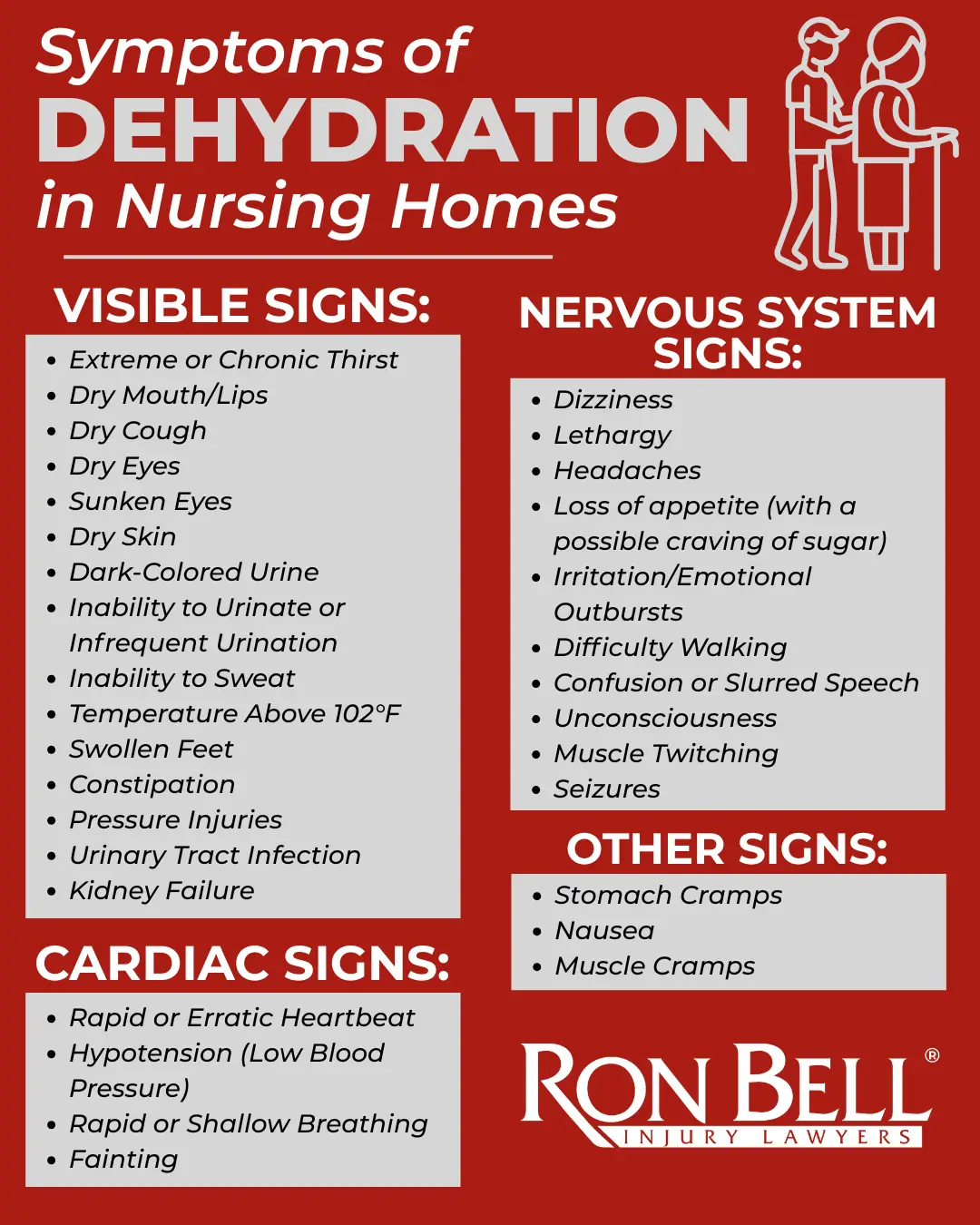
Dehydration affects the body so much, there are warning signs that your loved one may be suffering from it in their nursing home. These signs include both physical and mental changes.
Physical changes associated with nursing home dehydration include:
- Dry mouth: dry mouth can lead to difficulty swallowing, which can make nursing home residents resist water more.
- Dark urine: dark urine can be a sign of dehydration as well as kidney issues.
- Low blood pressure: fluid loss due to dehydration can lead to a lower blood volume, which can significantly affect blood pressure.
- Muscle cramps: lack of water in the muscles can cause cramping as the body’s balance between electrolytes and fluid can lead to muscle contractions and involuntary spasms.
- High heart rate: lower blood volume can lead to the blood thickening, causing the heart to need to pump harder to move oxygen through the body.
- Swollen feet: chronic dehydration in nursing home residents can lead to the body’s overcompensation in retaining water, which is seen in the feet.
- Headache: as a patient’s body losses fluids, the brain can shrink, causing contractions, and severe headaches. If the dehydration is severe enough, this can lead to brain damage.
Mental or personality changes associated with nursing home dehydration may include:
- Confusion: as the brain responds to loss of fluids, it can misfire and lead to severe cognitive confusion.
- Fainting: the lowering of blood pressure caused by dehydration can lead to fainting.
- Slurred speech: along with reduced blood volume and brain impairment, slurred speech is also caused by extreme dry mouth from dehydration
- Hallucinations: electrolyte imbalances from dehydration in nursing home residents can lead to hallucinations.
- Lethargic: lethargy in dehydration victims comes from the heart’s need to pump harder, nutrients not going to the brain and muscle, and a severe slowing of energy.
If you recognize any of these symptoms in your loved ones who reside in nursing homes, file a report with the nursing home, and, if necessary, contact Adult Protective Services to ensure your loved one is properly taken care of.
Can You Sue a Nursing Home for Dehydration?
Yes. If you can establish that your loved one suffered from dehydration in a nursing home due to the neglect of the nursing home or its staff, you can file a nursing home neglect lawsuit.
New Mexico Nursing Home Abuse Lawyers Are Ready to Help You
If your loved one suffered from dehydration in a nursing home, contact Ron Bell Injury Lawyers for a free case consultation. We understand how delicate this situation may be for you and your family, and we care about your privacy and wellbeing. Our team of nursing home abuse lawyers knows exactly how to take on big nursing homes.